
2026-08-31 · Robert Williams
Preventing Mold After Flood Damage in Glendale Homes
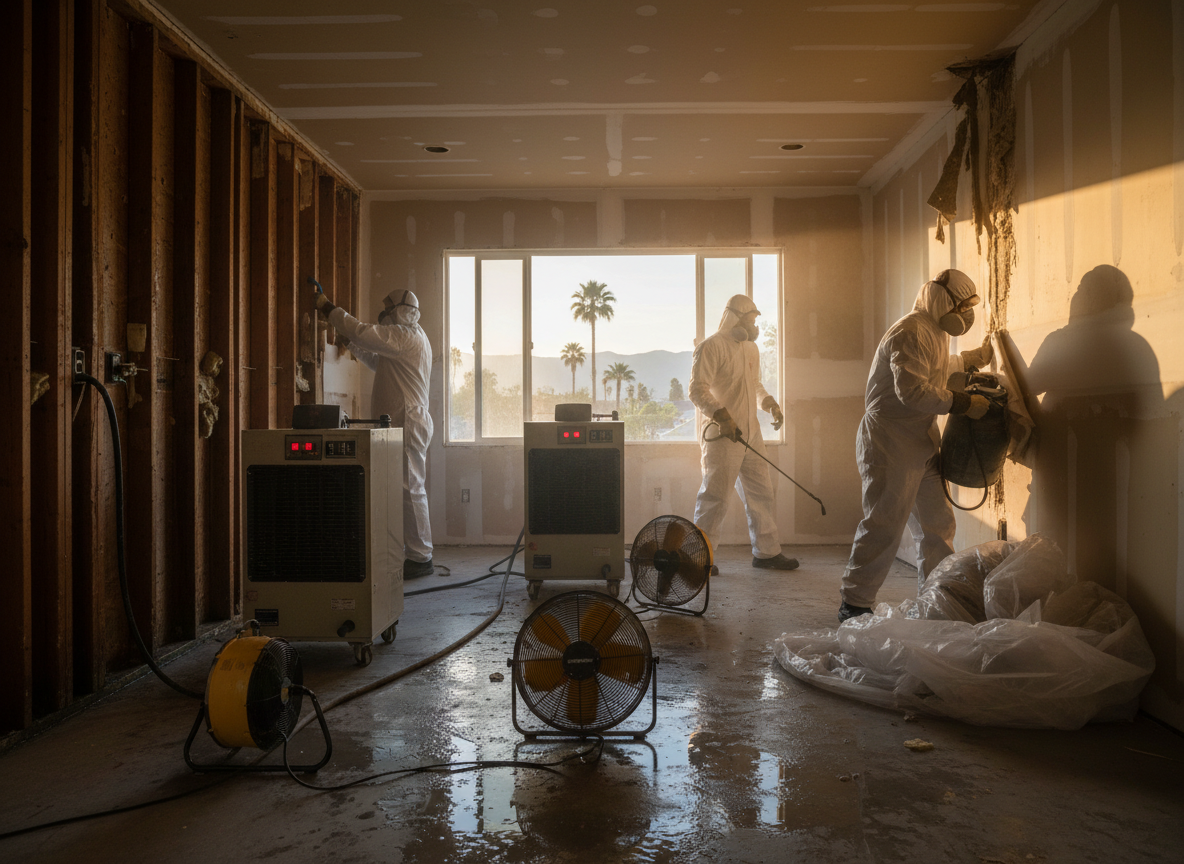
Mold growth after flood damage in Glendale homes can begin within 24-48 hours when standing water and high humidity remain unaddressed in the hot desert climate. Homes in neighborhoods such as Arrowhead and near Historic Downtown Glendale often feature older construction with basements or slab foundations that trap moisture longer after events tied to monsoon rains or nearby irrigation issues from Phoenix and Peoria. Removing water immediately and maintaining airflow prevents spores from taking hold in drywall, carpet, and wood framing common to Maricopa County properties.
Rapid Water Removal Steps
Start by extracting all standing water using professional equipment rather than household vacuums, which cannot handle the volume common after storms near State Farm Stadium or Desert Diamond Casino. Focus first on lower levels where gravity pulls moisture into crawl spaces and under slabs in Arrowhead Ranch homes. Follow extraction by removing saturated materials like carpet padding and drywall up to 12-18 inches above the water line to eliminate hidden pockets that feed mold in mild winter humidity spikes. Homeowners in the Luke Air Force Base area should prioritize this step because older military-adjacent housing stock tends to have tighter seals that slow natural evaporation.
Professional Flood Damage Cleanup crews use truck-mounted pumps and moisture meters to confirm removal down to 1% or less residual water content. Skipping this phase leaves conditions where mold colonies double every 24 hours once temperatures climb above 75 degrees, typical even in Glendale winters.
Thorough Drying and Dehumidification
After extraction, run commercial air movers and dehumidifiers for 3-5 days minimum to drop indoor humidity below 50% in Glendale's dry air that can still spike during monsoon season. Place units strategically around load-bearing walls and near the Glendale Chocolate Factory vicinity homes where stucco exteriors hold ambient moisture against framing. Monitor with hygrometers placed at multiple heights because hot summers accelerate surface drying while leaving subfloor moisture that later causes hidden mold behind baseboards. Properties in Peoria-adjacent sections of Glendale benefit from targeted drying because sandy Maricopa County soils drain unevenly and can reintroduce dampness.
Combine this with Structural Drying & Dehumidification protocols that include HEPA air scrubbing to capture airborne spores before they settle. Without these measures, even small leaks from burst pipes in slab homes can lead to remediation needs costing $2,000-$6,000 later.
Ongoing Monitoring and Prevention
Inspect hidden areas weekly for the first month using infrared cameras to detect temperature differentials indicating trapped moisture in ceilings or behind cabinets. In Historic Downtown Glendale bungalows, check attic vents and under sinks where mild winters allow condensation to form alongside any remaining flood residue. Schedule follow-up readings at the 14-day and 30-day marks because desert temperature swings from 50-degree nights to 90-degree days can reactivate dormant spores.
When mold appears despite best efforts, contact specialists for Mold Damage Remediation After Water Damage before it spreads through HVAC systems common in Arrowhead homes. Review Steps to Take After Flash Flooding Hits Your Glendale Property for sequenced actions that reduce recurrence risk in local flood-prone zones.