
2026-08-31 · Robert Williams
Steps to Take After Flash Flooding Hits Your Glendale Property
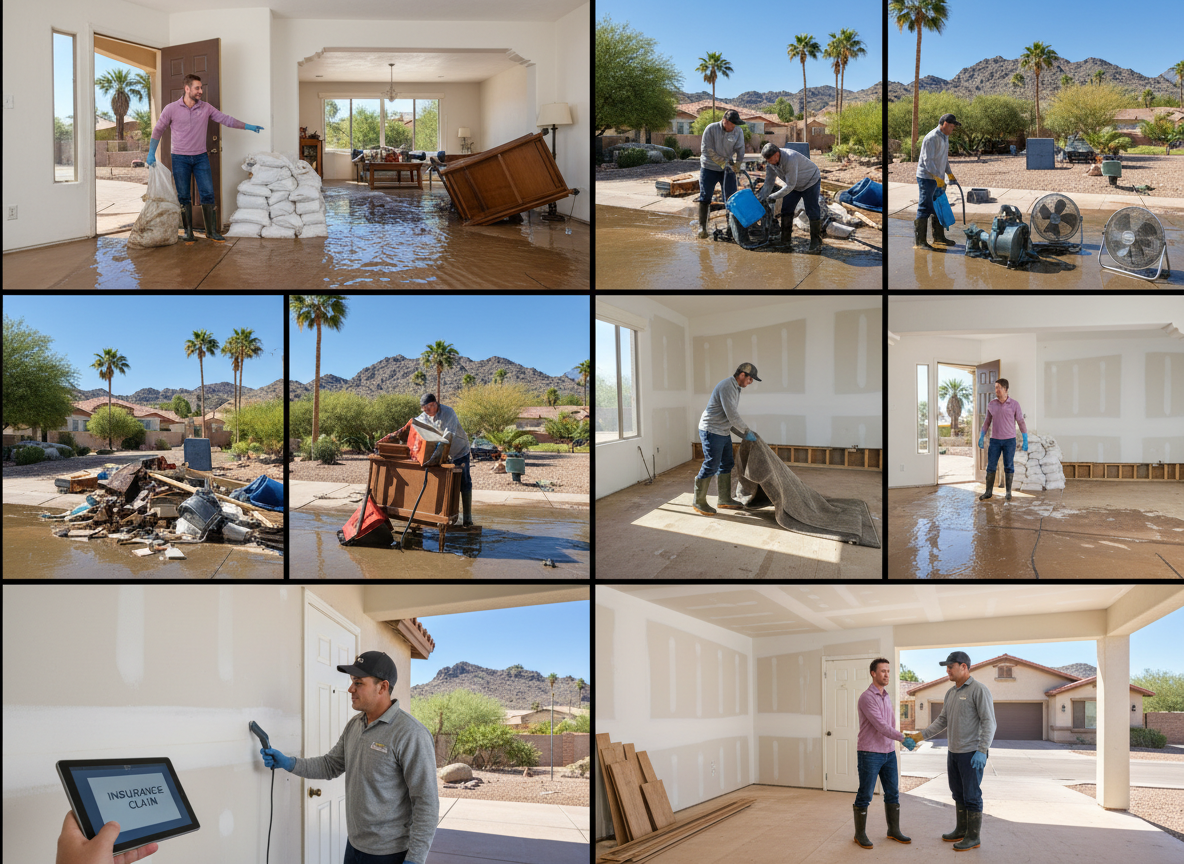
After flash flooding hits your Glendale property, begin by evacuating if water reaches electrical outlets or HVAC systems, then document damage with photos before any cleanup. In Maricopa County, summer monsoon rains often overwhelm older homes in Historic Downtown Glendale and the Luke Air Force Base area, where slab foundations and aging plumbing accelerate water intrusion. Act within the first hour to limit structural damage, as standing water in 100-degree heat can still promote rapid mold growth once temperatures moderate overnight.
Secure the Site and Address Immediate Hazards
Turn off electricity at the main breaker only if you can reach it without entering standing water. Move valuables and furniture to higher ground in homes common to Arrowhead neighborhoods, where many single-story ranch styles sit close to drainage channels. Avoid driving through flooded streets near State Farm Stadium, as hidden debris from Desert Diamond Casino parking areas often washes into residential zones. Wear protective boots and gloves when inspecting, since floodwater carries sediment from nearby desert washes that can irritate skin. Check for gas leaks by smell alone and open windows once power is confirmed off to begin natural ventilation in the dry climate.
Document Damage Thoroughly Before Extraction
Photograph every affected room, including baseboards, carpets, and drywall up to the water line, from multiple angles with timestamps. Note serial numbers on appliances damaged in kitchens or laundry rooms typical of Peoria-adjacent properties. Keep a written log of rooms impacted and items moved, as insurance adjusters in Glendale frequently request this detail for claims involving flood damage cleanup. Store copies of these records off-site or in cloud storage, since paper documents can be ruined if water reaches higher than expected in older homes around the Glendale Chocolate Factory district.
Begin Water Extraction and Removal
Remove standing water using submersible pumps rated for at least 1,500 gallons per hour, focusing first on lower levels in Arrowhead Ranch homes where basements are rare but garages and utility rooms flood quickly. Water extraction & removal prevents saturation of subfloors that can warp in the arid climate once drying begins. Extract carpet padding immediately, as it holds moisture against concrete slabs common in Maricopa County construction. Continue until no visible puddles remain, then move to hidden areas behind walls using moisture meters to locate pockets that standard mopping misses.
Dry the Structure and Monitor for Secondary Issues
Deploy air movers and dehumidifiers positioned to create cross-ventilation, targeting 40-50% relative humidity within 48 hours to match Glendale's typical desert conditions. How long does it take to dry out a flooded Glendale home depends on material porosity and initial water depth, with wood framing in 1970s-era homes often requiring 5-7 days. Check behind baseboards and under sinks daily, as residual moisture near Luke Air Force Base properties can lead to hidden growth if airflow is blocked by furniture. Flood damage cleanup teams use thermal imaging to verify complete drying before any reconstruction.
Schedule Professional Assessment
Contact a local restoration team once extraction is complete to evaluate hidden moisture in wall cavities and under flooring. Our crew operates from 5832 W San Miguel Ave, Glendale, AZ 85301 and is available Mon–Fri 8am–6pm, Sat 9am–2pm for assessments in Westgate and surrounding areas. This ensures any remaining issues from monsoon-related flooding are addressed before they affect nearby Phoenix or Peoria properties through shared drainage systems.